
RPSGT Review Test: Previous Posts + Sleep Staging Brain Waves
How to study for the RPSGT exam: review one topic, test yourself with best-answer questions, then correct your reasoning before moving on.
This post reviews material from our previous Sleep Pathways Guild posts, including sleep staging, EEG brain-wave clues, PAP therapy, leak artifact, oxygen therapy, and circadian rhythm concepts.
Before You Start
This is an original Sleep Pathways Guild practice review. It is written in a best-answer exam-prep style, but it is not copied from and is not affiliated with the BRPT exam.
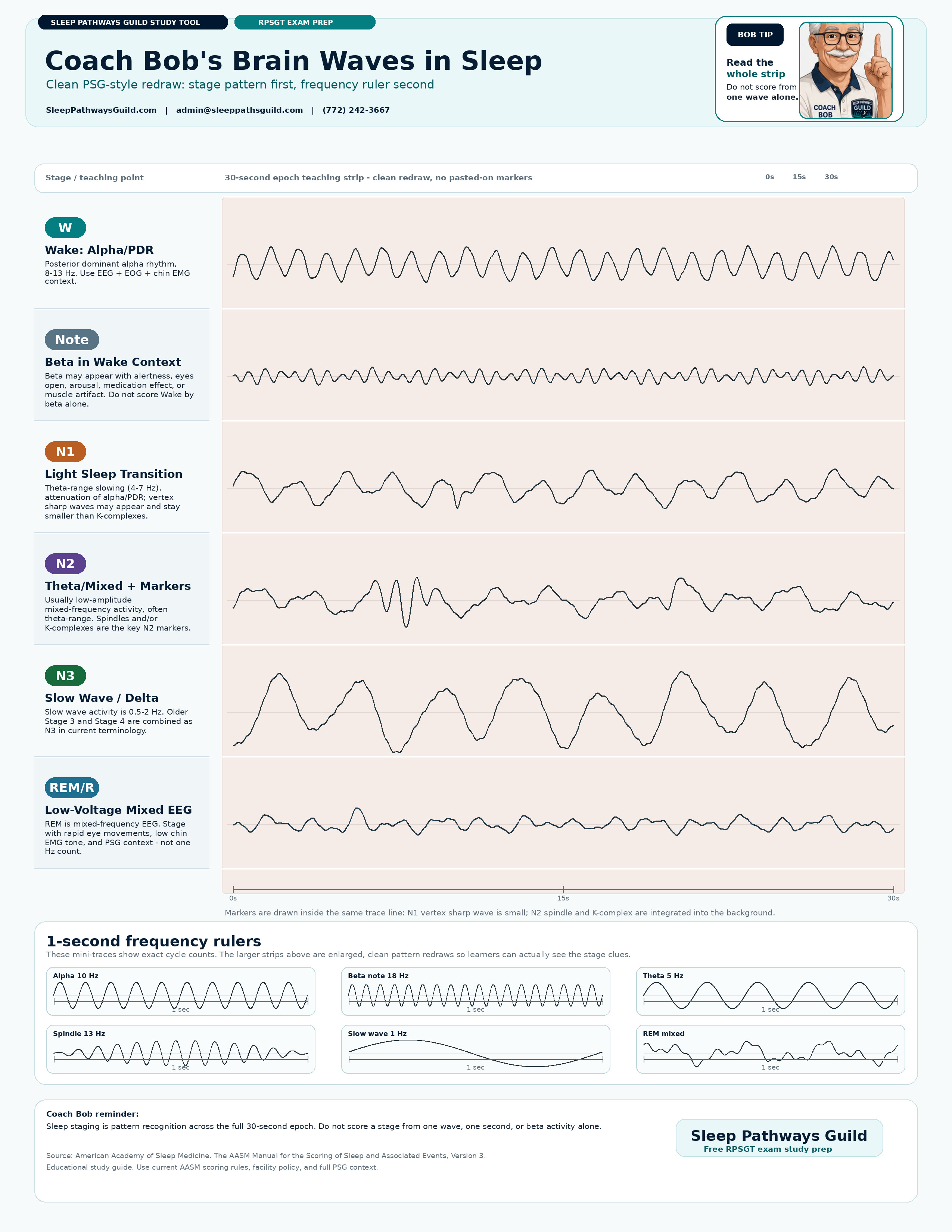
Free Download: Coach Bob Brain Waves and Sleep Staging Guide
Use this visual before taking the test. It reviews wake, N1, N2, N3, REM, alpha, theta, spindles, K-complexes, slow waves, and mixed-frequency REM clues.
Mini Lesson: Advanced Sleep Phase
Advanced Sleep-Wake Phase Disorder, often shortened in conversation to advanced sleep phase, is a circadian timing problem where the person’s internal sleep schedule is shifted earlier than the desired or conventional schedule.
What it looks like
The person becomes very sleepy early in the evening and wakes very early in the morning. A classic pattern may look like sleep from about 6–9 PM with awakening around 2–5 AM.
Important clue
When the person is allowed to follow their natural early schedule, sleep may be fairly normal. The problem is the mismatch between the body clock and the desired schedule.
Who is it more common in?
It is more commonly discussed in older adults, although circadian phase changes can occur across the lifespan.
How it is evaluated
Sleep logs, actigraphy, and circadian phase markers such as dim-light melatonin onset may help clarify whether the sleep schedule is consistently advanced.
Basic Treatment Concept
The goal is usually to delay the body clock so the person can stay awake later and wake later. Evening bright light may be used under appropriate clinical guidance. Morning light avoidance may also be considered depending on the treatment plan.
50-Question Review Test
Directions: Choose the single best answer. These questions review previous Sleep Pathways Guild posts and study visuals. After each question, open the answer to check your reasoning.
Sleep Staging and Brain Waves
1. A 30-second epoch shows a relaxed patient with eyes closed and posterior dominant alpha rhythm for more than half the epoch. What is the best stage?
A. N1
B. N2
C. Stage W
D. REM
Reveal answer
2. Which EEG frequency range is most associated with alpha rhythm?
A. 0.5–2 Hz
B. 4–7 Hz
C. 8–13 Hz
D. 30–60 Hz
Reveal answer
3. A learner counts 10 complete peak-to-peak cycles in one second. What frequency is represented?
A. 1 Hz
B. 5 Hz
C. 10 Hz
D. 30 Hz
Reveal answer
4. Which finding is most helpful for identifying N2 sleep?
A. Sleep spindle or K-complex
B. Sustained alpha rhythm
C. Continuous REMs with high chin tone
D. Loud snoring alone
Reveal answer
5. Which statement about vertex sharp waves is best?
A. They are required to score N3
B. They may appear during N1 transition
C. They are the same as K-complexes
D. They define REM sleep
Reveal answer
6. Which EEG pattern best supports N3 sleep?
A. Posterior dominant alpha
B. Low-voltage mixed-frequency EEG only
C. Slow waves in the appropriate frequency and amplitude context
D. Eye blinks
Reveal answer
7. Which staging label should be used in current teaching instead of separating old Stage 3 and Stage 4?
A. N3
B. N4
C. Delta REM
D. Stage S
Reveal answer
8. REM sleep is best staged using which combination?
A. EEG only
B. EEG, EOG, chin EMG, and epoch context
C. Snore channel only
D. Pulse oximetry only
Reveal answer
9. Beta activity may be seen during wakefulness, but what is the best scoring caution?
A. Beta alone is the main basis for scoring Stage W
B. Beta should never appear in wake
C. Stage W is scored mainly using alpha when present, eye movements/blinks, chin EMG, and context
D. Beta always means seizure activity
Reveal answer
10. A sleep spindle is best described as which type of finding?
A. A respiratory event
B. A characteristic EEG feature of N2 sleep
C. A pulse oximeter artifact
D. A PAP pressure change
Reveal answer
PAP Therapy, Leak, and Treatment Concepts
11. During PAP titration, the sleep technologist sees high leak and messy airflow. What should be checked before increasing pressure?
A. Mask seal and leak source
B. Room temperature only
C. ECG gain only
D. Video brightness only
Reveal answer
12. Which symptom may suggest mouth leak during nasal PAP therapy?
A. Xerostomia
B. Leg cramp only
C. Dream recall
D. Bruxism only
Reveal answer
13. The patient appears uncontrolled on PAP, but leak is high and rising. What is the best interpretation?
A. Pressure failure is certain
B. Leak may be making therapy look worse than it is
C. Oxygen must always be started immediately
D. The sleep stage is definitely REM
Reveal answer
14. What is the safest general approach when PAP leak suddenly increases?
A. Increase pressure repeatedly without assessment
B. Check mask position, mouth leak, tubing, and patient comfort
C. Ignore leak if SpO₂ is stable
D. Remove all respiratory belts
Reveal answer
15. BPAP conversion should always be interpreted in the context of what?
A. Mode, order, protocol, device capability, and patient tolerance
B. The patient’s pillow only
C. The ECG channel only
D. The snore microphone only
Reveal answer
16. Which statement about BPAP is best for exam preparation?
A. All BPAP modes use identical pressure limits
B. BPAP should be described by mode and clinical purpose
C. BPAP is never used for intolerance
D. BPAP means oxygen therapy
Reveal answer
17. In PAP titration, documentation should include which information?
A. Only the final pressure
B. Pressure changes, leak, patient response, position, sleep stage, and reason for changes
C. Only the patient’s height
D. Only the start time
Reveal answer
18. Which situation best supports addressing comfort before continuing pressure increases?
A. Patient is awake and says pressure feels intolerable
B. Patient is sleeping comfortably with stable signals
C. Leak is low and events resolved
D. The room is quiet
Reveal answer
19. Which phrase is the best Coach Bob rule for PAP artifact?
A. “Raise pressure first, ask later.”
B. “Do not chase pressure until you check the seal.”
C. “Ignore leak if the patient is asleep.”
D. “Oxygen fixes all artifacts.”
Reveal answer
20. Which is a common cause of PAP leak?
A. Mask displacement
B. Perfect mask fit
C. Stable headgear with no movement
D. Normal ECG rhythm
Reveal answer
Oxygen, Respiratory, and Safety Thinking
21. Supplemental oxygen during PAP titration should generally be guided by what?
A. Physician order, facility policy, and protocol
B. Patient preference only
C. Snore volume only
D. The presence of alpha rhythm
Reveal answer
22. What is the best technologist response when oxygen saturation remains low after obstructive events appear controlled?
A. Follow facility oxygen protocol and document clearly
B. Ignore it because events are gone
C. Turn off PAP
D. Remove oximetry
Reveal answer
23. Which signal helps identify oxygen desaturation trends?
A. Pulse oximetry
B. Chin EMG only
C. ECG only
D. Video only
Reveal answer
24. Which pattern is most suspicious for obstructive sleep apnea?
A. Reduced airflow with continued respiratory effort
B. No effort and no airflow during a central pause
C. Stable airflow and stable oxygen
D. Alpha rhythm only
Reveal answer
25. Which is the best reason to check the video during a study?
A. To correlate body position, movements, mask displacement, and behaviors with the signals
B. To replace all PSG channels
C. To score oxygen saturation
D. To calculate ECG rate
Reveal answer
26. A respiratory event appears worse after the patient rolls onto the back. What should be documented?
A. Body position and associated signal changes
B. Only room number
C. Only the brand of bed
D. Nothing if PAP is being used
Reveal answer
27. What should a technologist do when a signal appears abnormal?
A. Consider artifact, patient movement, equipment issue, and clinical context
B. Score the worst possible event immediately
C. Ignore it
D. Delete the epoch
Reveal answer
28. Which is most likely to affect PAP signal reliability?
A. Large mask leak
B. A clean, stable seal
C. Normal body position documentation
D. A properly attached oximeter
Reveal answer
29. The patient reports dry mouth and the leak graph rises while using a nasal mask. What is the best first thought?
A. Possible mouth leak
B. Definite central apnea
C. Definite REM sleep
D. ECG artifact
Reveal answer
30. Which is the best reason to avoid excessive pressure changes during artifact?
A. You may be treating the artifact instead of the patient
B. Pressure never matters
C. Artifact improves all therapy
D. PAP does not require monitoring
Reveal answer
Circadian Rhythm and Advanced Sleep Phase
31. A patient is very sleepy at 7 PM and wakes spontaneously at 3 AM despite wanting a later schedule. Which disorder pattern is most consistent?
A. Delayed sleep phase
B. Advanced sleep phase
C. Narcolepsy type 1
D. REM behavior disorder
Reveal answer
32. Which complaint best fits delayed sleep phase rather than advanced sleep phase?
A. “I fall asleep too early.”
B. “I wake at 3 AM and cannot stay asleep until morning.”
C. “I cannot fall asleep until very late and cannot wake up in the morning.”
D. “I stop breathing in sleep.”
Reveal answer
33. Which tool can help document an advanced sleep phase pattern over multiple days?
A. Sleep log or actigraphy
B. One blood pressure reading
C. One ECG strip
D. A single snore burst
Reveal answer
34. In advanced sleep phase, what is usually the treatment direction?
A. Delay the circadian phase toward a later schedule
B. Advance sleep even earlier
C. Remove all light exposure all day
D. Increase PAP pressure
Reveal answer
35. Which light-timing concept is commonly associated with treatment of advanced sleep phase?
A. Evening bright light under clinical guidance
B. Bright light only at 3 AM
C. No light timing matters
D. Oxygen therapy
Reveal answer
36. Which statement about advanced sleep phase is best?
A. Sleep is always fragmented when the person follows their preferred schedule
B. The internal sleep schedule is early relative to desired/conventional time
C. It is the same as shift work disorder
D. It is scored from one EEG epoch
Reveal answer
37. A patient sleeps well from 8 PM to 4 AM when allowed to follow that schedule but complains because family life requires a later schedule. What does this suggest?
A. Circadian timing mismatch
B. Definite insomnia disorder only
C. Definite PAP failure
D. Definite REM behavior disorder
Reveal answer
38. Which term refers to the master circadian clock region?
A. Suprachiasmatic nucleus
B. Tibialis anterior
C. Chin EMG
D. Thoracic belt
Reveal answer
39. What does DLMO stand for?
A. Dim-light melatonin onset
B. Delayed leg movement order
C. Diaphragm leak mask output
D. Delta latency muscle onset
Reveal answer
40. Which statement best compares advanced and delayed sleep phase?
A. Advanced is too early; delayed is too late
B. Advanced is REM; delayed is N3
C. Advanced is oxygen-related; delayed is PAP-related
D. They are the same disorder
Reveal answer
Mixed Best-Answer Review
41. Which finding should make a scorer cautious before calling REM?
A. Low chin tone, REMs, and mixed-frequency EEG together
B. Wake-like EEG without checking EOG and chin EMG
C. Rapid eye movements with low chin tone
D. REM context across surrounding epochs
Reveal answer
42. Which is the best description of a K-complex?
A. A distinct N2 waveform feature
B. A PAP leak value
C. A respiratory effort belt
D. A pulse oximetry unit
Reveal answer
43. Which is the best description of theta activity?
A. 4–7 Hz activity commonly associated with light sleep transition
B. 13–30 Hz beta activity
C. 0.5–2 Hz slow wave only
D. A PAP mode
Reveal answer
44. A technologist sees high-frequency activity contaminating EEG channels. What should be considered?
A. Artifact or muscle activity may be present
B. It is always sleep spindle activity
C. It is always N3
D. It is always apnea
Reveal answer
45. Which is the best exam strategy for sleep staging questions?
A. Use only one channel
B. Use EEG, EOG, chin EMG, and surrounding context
C. Guess based on snoring
D. Use oxygen saturation only
Reveal answer
46. Which clue supports N1 more than N2?
A. Theta with possible vertex sharp waves but no spindle or K-complex yet
B. Clear sleep spindle
C. K-complex
D. High-amplitude slow waves dominating the epoch
Reveal answer
47. Which clue supports N2 more than N1?
A. Sleep spindle
B. Eye blink
C. Stable posterior alpha for most of the epoch
D. Dry mouth
Reveal answer
48. Why should the RPSGT learner study artifact recognition?
A. Artifact can mimic or hide clinically important events
B. Artifact never matters
C. Artifact automatically scores sleep stage
D. Artifact replaces the need for documentation
Reveal answer
49. Which patient statement best fits exploding head syndrome education from our previous mini lesson?
A. “I hear a sudden loud bang or explosion sensation as I fall asleep or wake up.”
B. “My mask leaks when I roll over.”
C. “I wake at 3 AM every day and feel sleepy at 7 PM.”
D. “My oxygen drops during obstructive events.”
Reveal answer
50. What is the best way to use this review test?
A. Memorize the letter only
B. Read the explanation and identify why the correct answer is better than the distractors
C. Skip missed questions
D. Use it as a substitute for official scoring rules
Reveal answer
Quick Study Plan
| Step | What to Do |
|---|---|
| 1 | Open the Coach Bob brain-wave guide and review the sleep-stage clues. |
| 2 | Take the 50-question test without opening the answers first. |
| 3 | Mark missed questions as sleep staging, PAP therapy, artifact, oxygen, or circadian rhythm. |
| 4 | Review the topic you missed before taking the next practice set. |
References and Study Sources
Source reference: American Academy of Sleep Medicine. The AASM Manual for the Scoring of Sleep and Associated Events, Version 3.
Additional Sleep Pathways Guild library review included sleep-staging education, PAP titration principles, circadian rhythm disorder teaching, and polysomnography signal interpretation resources.
Educational study guide only. Use current AASM scoring rules, provider orders, facility policy, and full PSG context when scoring or performing patient care.
Linked references & resources
Official sources are prioritized. Book links open Amazon search results so readers can compare available editions.
- AASM Scoring Manual — official page
Use the current version followed by your facility.